 Cosmetic Dentistry
  General Dentistry
  Restorative Dentistry
  Dental Implants
  Orthodontics
  Sleep Dentistry
  Emergency Dentist
  Children’s Dentist
 Picture this: you’re in your 50s, 60s, or even 70s, looking in the mirror and wondering whether it’s too late to address those teeth that have bothered you for decades. Perhaps you never had the chance for orthodontic treatment as a child. Or maybe your teeth have shifted over the years. Either way, you’re asking yourself: Is there an age too old for braces?
The short answer may surprise you. Chronological age alone does not determine whether someone can undergo orthodontic treatment. What matters far more is your overall oral health, including the condition of your bones and gums. Research indicates that while biological responses differ between younger and older patients, teeth movement in older adults remains possible when periodontal health is adequate.
This article addresses common myths about braces age restrictions. We explore what determines whether someone is too old for orthodontic treatment based on evidence, not assumptions. We examine why bone density, gum condition, and existing dental health play a more significant role than the number of candles on your birthday cake. Whether you’re considering braces after 50 or exploring options later in life, you’ll find practical information to help you make an informed decision.
Important: The information provided here is general in nature. Individual circumstances vary, and a professional consultation is necessary to assess your suitability for orthodontic treatment.
Contents Navigation
- Summary of The Content
- Understanding Orthodontic Treatment and Age
- Common Age Myths About Braces Debunked
- What Actually Determines Orthodontic Candidacy
- Risks and Benefits of Orthodontic Treatment for Older Adults
- Orthodontic Treatment Options for Older Adults
- Treatment Considerations for Older Patients
- Making Your Decision: Is Orthodontic Treatment Right for You?
- Final Thoughts
Summary of The Content
- Age alone does not disqualify adults from orthodontic treatment. Bone and gum health are the primary determining factors.
- Teeth can move at any age through the natural process of bone remodelling, though the timeline may differ for older patients.
- Research indicates that while tooth movement may be slower in adults, successful outcomes remain achievable with healthy periodontal tissues.
- Common myths suggesting strict age limits for braces lack scientific support when individual health factors are considered.
- Various orthodontic options exist for older adults, including traditional metal braces, clear aligners, and ceramic braces.
- Possible risks such as root resorption, gum sensitivity, and longer treatment times should be discussed during consultation.
- Pre-existing dental conditions, including decay or periodontal disease, must be addressed before beginning orthodontic treatment.
- A thorough professional assessment is essential to determine each patient’s adult orthodontic candidacy.
Understanding Orthodontic Treatment and Age
Many adults assume orthodontic treatment is reserved exclusively for teenagers. This perception developed because most orthodontic patients historically began treatment during adolescence when growth spurts facilitated faster results. However, the biological principles underlying tooth movement apply throughout life.
Orthodontic treatment works by applying controlled forces to teeth, which triggers a process called bone remodelling. When pressure is applied to a tooth, specific bone cells break down bone on the pressure side while new bone forms on the tension side. This allows the tooth to shift gradually into a new position.
Data from the Australian Society of Orthodontists indicates that approximately one in five orthodontic patients are adults, reflecting a growing trend in adult orthodontic treatment. Adults seek treatment for various reasons, including functional improvements, bite alignment, and addressing teeth that have shifted over time.
How Teeth Move at Any Age
The biological mechanism of tooth movement involves two types of bone cells: osteoclasts (which break down bone) and osteoblasts (which build new bone). When orthodontic forces are applied, these cells respond by remodelling the bone surrounding tooth roots. This process occurs in patients across all age groups.
Research indicates that healthy adult teeth respond to orthodontic forces. Studies confirm that teeth movement in older adults follows the same biological process, though it may be slower.
Several factors influence how quickly teeth move:
- Periodontal ligament condition:
The periodontal ligament connects teeth to surrounding bone, and its health directly affects how forces are transmitted and how efficiently remodelling occurs. - Bone metabolism rate:
The speed at which bone cells respond varies between individuals, and some adults maintain robust bone metabolism well into their later years. - Force application:
Dental professionals calibrate forces based on individual patient factors, and lighter forces applied over longer periods can achieve effective movement while minimising tissue stress.
It’s important to set realistic expectations. Treatment timelines for adults often extend beyond those for adolescents. Studies suggest that adult treatment may take approximately 4-12 months longer than comparable adolescent treatment.
Physiological Factors That Matter More Than Age
When assessing orthodontic candidacy, dental professionals evaluate several physiological factors that carry more weight than chronological age:
- Bone density:
Adequate bone must surround tooth roots to support movement and maintain stability after treatment. A healthy person in their 70s may have more favourable bone conditions than someone decades younger with compromised bone health. - Periodontal health:
The gums and supporting structures must be free from active disease. Periodontal disease causes inflammation and bone loss that can complicate or contraindicate orthodontic treatment. - Periodontal ligament condition:
This particular tissue plays a crucial role in transmitting orthodontic forces and initiating bone remodelling. Age-related changes can affect treatment response, though healthy ligaments continue functioning effectively. - Overall dental status:
The presence of decay, infections, restorations, or missing teeth affects treatment planning regardless of patient age. - The key takeaway:
a healthy 70-year-old with strong bone density and healthy gums may be a more suitable candidate than a 30-year-old with active periodontal disease. Individual assessment determines suitability, not the date on your driver’s licence. This is why questions about braces’ age limits cannot be answered with a simple number.
Common Age Myths About Braces Debunked
Misconceptions about age and orthodontics prevent many adults from seeking treatment that could benefit their oral health. Let’s examine two prevalent myths and the evidence that contradicts them.
Myth: “Braces Are Only for Teenagers”
This belief stems from historical patterns rather than biological limitations. For decades, orthodontic treatment was mainly offered during adolescence. Parents made healthcare decisions for children, and growth spurts supported certain tooth movements. Social norms also linked braces with teenage years.
However, orthodontic science applies equally to adult teeth. The number of adult orthodontic patients has increased significantly over the past few decades. This growth reflects both changing attitudes and increased availability of discrete treatment options. The question of whether someone is too old for orthodontic treatment should focus on health status, not birth year.
Adults seek orthodontic treatment for legitimate reasons:
- Teeth naturally shift throughout life, and alignment achieved in youth may change over decades.
- Some adults never had access to orthodontic care during childhood.
- Bite problems can worsen with age, affecting chewing function and comfort.
- Periodontal issues sometimes require orthodontic intervention as part of comprehensive treatment.
Myth: “You’re Too Old After 50/60/70”
Many adults in their middle and later years assume they’ve missed their window for orthodontic treatment. Some studies indicate that respondents aged 40 or older considered themselves “too old” for treatment despite expressing interest in improving their dental alignment.
The reality contradicts this assumption. Data shows that the number of patients aged 60 and older seeking braces has increased in recent years.
Orthodontic treatment seniors receive follows the same principles as treatment for younger adults, with adjustments based on individual health factors. There are no strict braces age restrictions based solely on chronological age.
Several considerations apply to braces after 50 and beyond:
- Treatment duration:
Bone remodelling rates often slow with age, potentially extending treatment timelines. This represents a difference in pace, not possibility. - Pre-treatment preparation:
Existing dental work, gum issues, or bone concerns may require attention before orthodontic treatment begins. - Modified approaches:
Dental professionals can adjust treatment plans to account for age-related factors, using lighter forces and longer intervals between adjustments. - Health conditions:
Certain systemic conditions affecting bone or healing may influence candidacy, but these require individual evaluation.
The key point is that no universal age cutoff exists for braces’ age limits. A consultation with a qualified dental professional can determine whether orthodontic treatment suits your specific circumstances. This applies whether you’re exploring braces after 50, 60, or 70.
What Actually Determines Orthodontic Candidacy
Rather than focusing on chronological age, dental professionals assess specific health factors when evaluating adult orthodontic candidacy.
Bone and Gum Health Requirements
Adequate bone support represents a fundamental prerequisite for orthodontic treatment at any age. Teeth require sufficient healthy bone to tolerate treatment forces and remain stable after movement.
Periodontal health is equally critical. The gums must be free from active infection and inflammation. Patients with a history of periodontal disease may still be candidates for orthodontic treatment, but the disease must be controlled and stable before beginning. A periodontist may need to provide clearance.
Signs that may affect candidacy include:
- Active gum disease:
This condition is characterised by bleeding, swelling, or pocket depths exceeding normal ranges. - Significant bone loss:
This is visible on dental X-rays as reduced bone height around tooth roots. - Uncontrolled inflammation:
This refers to ongoing periodontal issues that haven’t responded to treatment. - Tooth mobility:
Excessive looseness suggests compromised bone support.
These factors are not automatically disqualifying. Many can be addressed through appropriate treatment before orthodontic work begins.
Overall Dental Health Considerations
Beyond bone and gum health, several dental factors require evaluation:
- Existing decay:
Any cavities must be addressed before orthodontic treatment because braces and aligners make oral hygiene more challenging. - Infections:
Active infections, including abscesses, require treatment, and the mouth must be free of infection before applying orthodontic forces. - Previous dental work:
Crowns, bridges, implants, and large fillings affect treatment planning, and dental implants cannot be moved orthodontically because they’re fused directly to bone. - Missing teeth:
Gaps from extracted or missing teeth influence both the treatment plan and goals. - Root condition:
The length and shape of tooth roots affect how they respond to orthodontic forces.
Treatment sequencing becomes important when multiple issues coexist. A patient might need periodontal treatment first, followed by restorative work, then clearance from relevant dental professionals before orthodontic treatment can commence.
Risks and Benefits of Orthodontic Treatment for Older Adults
Any dental treatment carries potential benefits and risks. Older adults considering orthodontic treatment deserve balanced information about both.
Potential Benefits
Orthodontic treatment may offer functional and oral health improvements for suitable candidates:
- Bite alignment:
Orthodontic treatment can address bite problems that affect chewing efficiency and comfort, and properly aligned teeth distribute biting forces more evenly. - Easier cleaning:
Crowded or overlapping teeth create areas where plaque accumulates, and straightened teeth may be easier to clean effectively. - Reduced abnormal wear:
Misaligned teeth sometimes wear unevenly, and orthodontic treatment may help distribute forces more appropriately. - Preparation for other dental work:
Sometimes, teeth need repositioning before crowns, bridges, or implants can be placed in appropriate positions.
Possible Risks and Considerations
Orthodontic treatment also carries risks that patients should understand:
- Root resorption:
Orthodontic forces can cause some shortening of tooth roots. Mild resorption rarely causes problems, but severe resorption may compromise tooth stability. Regular X-ray monitoring during treatment helps detect this issue early. - Longer treatment times:
Adult treatment often takes longer than adolescent treatment, and some patients may require 24 months or more, depending on case complexity. - Gum sensitivity and recession:
Moving teeth can affect gum position, and patients with thin gum tissue or existing recession may be at higher risk. - Periodontal complications:
Orthodontic treatment involves controlled inflammation as part of the tooth-movement process. In patients with compromised periodontal health, this may exacerbate periodontal problems if not carefully managed. - Black triangles:
When previously crowded teeth are aligned, small triangular spaces may appear near the gum line where gum tissue doesn’t fully fill the gaps. This cosmetic concern is more common in adults. - Relapse risk:
After treatment, teeth may shift toward their original positions. Retention (wearing retainers) is essential for maintaining results.
Patients should discuss these risks thoroughly during consultation. Individual risk factors vary, and a qualified practitioner can explain which concerns are most relevant to your specific situation. This discussion is particularly important for orthodontic treatment seniors considering their options.
Orthodontic Treatment Options for Older Adults
Several orthodontic appliance types suit adult patients. Each has characteristics that may make it more or less appropriate depending on individual needs. The appropriate choice depends on clinical factors and patient circumstances.
Traditional Metal Braces
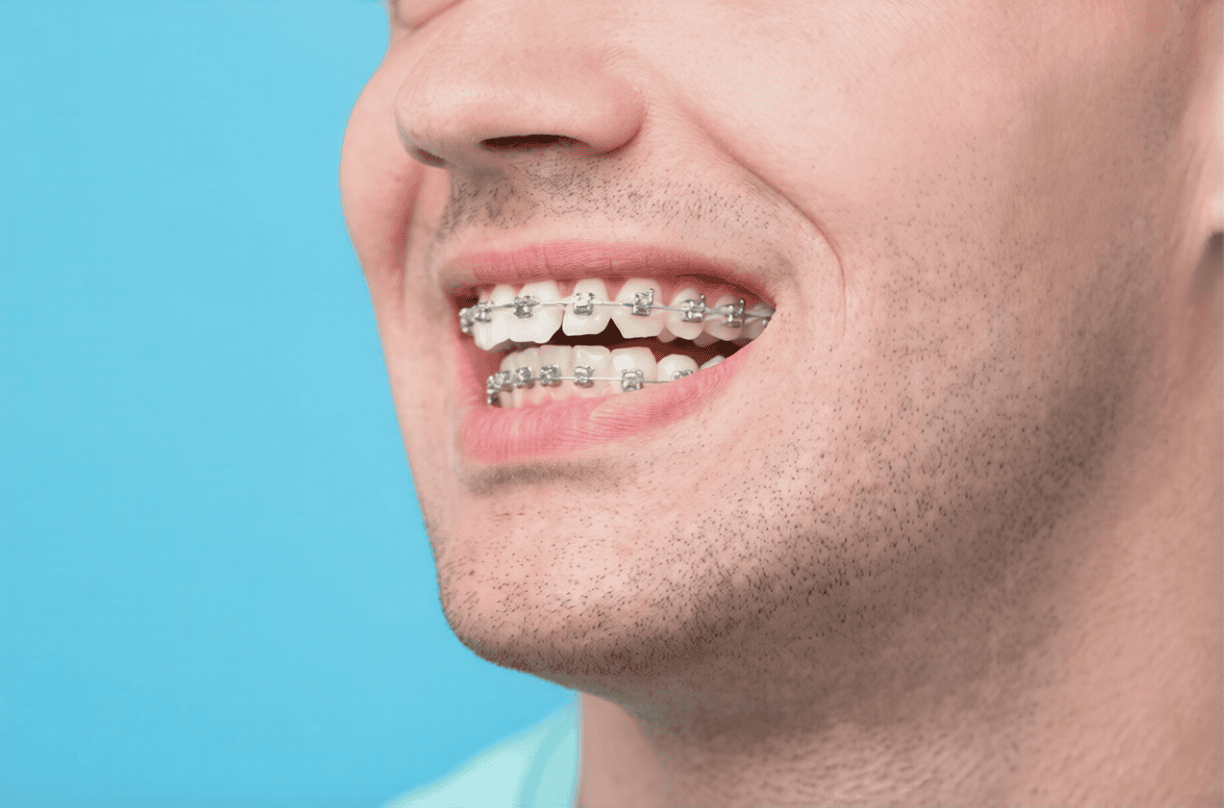
Metal braces remain a common and effective orthodontic option, consisting of metal brackets bonded to teeth and connected by wires that apply controlled forces.
- Metal braces may be recommended for complex cases requiring precise tooth control.
- They generally provide the orthodontist with maximum ability to move teeth in multiple directions.
- Regular adjustments are required, commonly every four to eight weeks.
- Brackets are visible when smiling or speaking.
- They cannot be taken off by the patient during treatment.
- Careful oral hygiene around brackets and wires is essential.
For some older adult orthodontics cases involving significant bite adjustment or complex movement requirements, traditional braces may be the recommended approach.
Clear Aligners (e.g., Invisalign)
Clear aligners are removable plastic trays that fit over teeth. Patients progress through a series of aligners to achieve gradual tooth movement.
- Clear aligners may be appropriate for mild to moderate alignment concerns.
- They are removable for eating, drinking, and oral hygiene.
- They are less visible than traditional braces.
- Aligners must be worn 20-22 hours daily for effectiveness.
- They may not suit all case types, particularly complex bite issues.
- Effectiveness depends significantly on patient compliance.
Clear aligners have become popular among adult patients who prefer a less noticeable option, though they’re not suitable for everyone.
Ceramic/Clear Braces
Ceramic braces function similarly to metal braces but use tooth-coloured or clear brackets that blend more closely with natural teeth.
- Ceramic braces are less visible than metal brackets while providing similar treatment capabilities.
- They may be appropriate for patients wanting the effectiveness of braces with reduced visibility.
- They require the same care and adjustment schedule as metal braces.
- Brackets may be slightly larger than metal brackets.
- They may be more prone to staining if oral hygiene is not maintained.
Each option has specific advantages depending on individual needs. A consultation is required to determine which approach may be appropriate. This is an important step for anyone exploring older adult orthodontics options.
Treatment Considerations for Older Patients
Adults considering orthodontic treatment should understand several practical factors that may affect their experience.
- Treatment timeline variations:
Adult treatment often extends beyond the 18-24 month average seen in adolescent cases. Duration depends on case complexity, individual biological response, and treatment goals. - Appointment requirements:
Orthodontic treatment requires regular monitoring appointments, commonly every four to eight weeks, depending on the appliance type. Adults balancing work and other commitments should consider appointment scheduling when planning treatment. - Oral hygiene importance:
Maintaining thorough oral hygiene during orthodontic treatment is crucial at any age, but may be particularly important for adults with existing restorations or periodontal concerns. - Coordination with other dental care:
Many adult patients have ongoing dental needs that must continue during orthodontic treatment. Coordination between your orthodontic provider and general dentist becomes important. - Retention requirements:
After active treatment concludes, retainers are necessary to maintain results. Many adults require long-term or indefinite retention.
Making Your Decision: Is Orthodontic Treatment Right for You?
Deciding whether to pursue orthodontic treatment involves weighing multiple factors. Consider these questions as you evaluate your options:
- What are your goals?
Are you seeking functional improvements, or are cosmetic concerns your primary motivation? - What is your current oral health status?
Have you had recent dental examinations? Do you have active decay, gum disease, or other issues requiring attention? - Are you prepared for the commitment?
Orthodontic treatment requires consistent effort in attending appointments, maintaining oral hygiene, and following instructions. - Have you had a professional assessment?
Only a qualified dental professional can assess your individual situation through X-rays, clinical examination, and detailed evaluation.
The question of whether there’s an age too old for braces cannot be answered by age alone. Braces’ age limits are not determined by arbitrary numbers but by individual health factors.
An 80-year-old with healthy bones and gum condition may still be a suitable candidate for orthodontic treatment. By contrast, a 40-year-old with significant periodontal disease may not be without preliminary treatment.
Final Thoughts
The question “Is there an age too old for braces?” doesn’t have a simple numerical answer. Age alone does not determine orthodontic eligibility. Instead, factors including bone density, gum health, periodontal condition, and overall dental status determine whether someone is a suitable candidate for orthodontic treatment.
Research shows that teeth movement in older adults follows the same biological principles through bone remodelling. This is why strict age limits for braces lack scientific support.
While treatment timelines may extend and certain considerations apply specifically to older patients, the fundamental processes remain constant throughout life. Common myths suggesting strict age restrictions for braces lack scientific support when individual health factors are properly assessed.
The key determinants of adult orthodontic candidacy include adequate bone density and healthy gums free from active periodontal disease. Overall dental health, absence of contraindicating conditions, and willingness to commit to treatment are also essential.
If you’re considering orthodontic treatment regardless of your age, the next step is a professional assessment. We welcome you to contact Karrinyup Dental Centre to discuss your orthodontic questions. Our team can provide a comprehensive evaluation to help you understand your options. We will help you determine whether orthodontic treatment may be appropriate for your individual circumstances.
Disclaimer
This information is general in nature and does not constitute medical or dental advice. Individual circumstances vary, and outcomes differ between patients. A consultation with a qualified dental professional is required to assess your suitability for orthodontic treatment. Any claims regarding treatment outcomes are based on peer-reviewed research and represent general findings; individual results may differ.
This content has been prepared by Karrinyup Dental Centre for educational purposes only. For appointments or enquiries regarding orthodontic assessment, please contact the clinic directly.