
 Cosmetic Dentistry
  General Dentistry
  Restorative Dentistry
  Dental Implants
  Orthodontics
  Sleep Dentistry
  Emergency Dentist
  Children’s Dentist
 Considering orthodontic treatment is a significant decision. It may be recommended by your dentist, noticed through your own observations, or explored for a family member. Starting the process often raises questions about what to expect.
Orthodontic treatment requires a meaningful commitment of time and resources. Most treatment spans 12 to 24 months, and success depends on consistent engagement with your provider throughout. Thousands of patients across Perth receive orthodontic care each year. The pathway is well-established and predictable, though individual experiences vary based on clinical needs.
Many people benefit from understanding the complete braces journey in Perth—from the initial orthodontic consultation through to the retention phase. While every patient’s situation differs, knowing the general structure of the process helps establish realistic expectations before you begin.
This guide walks through each major phase of orthodontic treatment. It provides factual information to support your decision-making and help you understand what occurs at each stage.
Contents Navigation
- Summary of The Content
- Recognising When Orthodontic Treatment May Be Beneficial
- What Happens During Your Orthodontic Consultation in Perth
- Creating Your Personalised Orthodontic Treatment Plan
- Getting Your Braces Fitted - The Placement Appointment
- Navigating Daily Life During Your Braces Journey
- What to Expect When Your Braces Come Off
- Retention Phase - Maintaining Your Results
- Final Thoughts
Summary of The Content
- This guide covers initial assessment and recognising when consultation may be beneficial for orthodontic concerns.
- Learn what happens during your orthodontic consultation in Perth, including assessment procedures and diagnostic records.
- Discover how treatment plans are developed based on individual needs, clinical factors, and treatment objectives.
- Find out what to expect during the braces-fitting appointment and in the hours and days immediately after.
- Review daily life adaptations needed during the treatment period, from eating restrictions to oral hygiene routines.
- See what braces adjustment appointments involve and how they maintain treatment progress over time.
- Explore what happens when braces come off and the immediate transition to the retention phase.
- Learn about orthodontic retainer wear schedules and the importance of maintaining long-term results.
- Review retention phase requirements, common challenges, and ongoing care considerations for lasting success.
Recognising When Orthodontic Treatment May Be Beneficial
Not all alignment concerns require orthodontic intervention. Similarly, some bite or spacing issues may not be immediately apparent. Common indicators that warrant professional assessment can help you decide whether to seek consultation.
These signs do not constitute a diagnosis—only a qualified dental provider can determine whether treatment is appropriate. However, recognising these indicators provides reason to discuss your concerns with a dental professional.
Several signs often prompt patients to seek professional evaluation:
- Difficulty with biting or chewing:
When the upper and lower teeth do not meet properly, certain foods can be uncomfortable to eat. You may find yourself modifying your diet or avoiding specific textures without consciously recognising why. - Crowded or overlapping teeth:
When teeth compete for space in the jaw, they may twist, rotate, or overlap. Beyond aesthetic considerations, crowded teeth are more difficult to clean. Toothbrush bristles and floss cannot access all tooth surfaces, increasing the risk of plaque accumulation. - Noticeable gaps or spacing:
Spaces between teeth can affect how teeth function together during chewing. Food may become trapped more easily between widely spaced teeth, and gaps can shift over time as teeth naturally drift. - Jaw discomfort or joint sounds:
While not commonly related to tooth alignment, certain bite problems can contribute to jaw strain. Clicking, popping, or aching sensations around the jaw joint may warrant evaluation by a dental professional. - Concerns about smile appearance:
Feeling self-conscious about your smile is appropriate. Concerns about alignment can affect social confidence and comfort in photographs, and addressing them is appropriate.
Several pathways can lead to orthodontic consultation:
- During routine check-ups, general dentists frequently identify alignment or bite concerns and may recommend consultation as part of comprehensive dental care planning.
- In Perth, you do not require a referral from another dentist, allowing many patients to book consultations immediately after noticing concerns.
- Professional organisations generally recommend that children receive an initial evaluation between the ages of seven and eight, when adult teeth are emerging, and jaw growth is occurring.
- Adults of any age can complete orthodontic treatment, as there is no upper age limit for moving healthy teeth.
Before booking an appointment, consider these factors:
- Treatment goals:
Some patients prioritise aesthetic improvements, whilst others seek functional benefits such as improved chewing or simplified oral hygiene. - Time commitment:
Most orthodontic treatment lasts 12 to 24 months, though some cases may extend longer depending on complexity. - Financial investment:
Orthodontic treatment is a significant investment, and many dental clinics offering dental braces in Perth provide structured payment plans.
These factors should not discourage you from seeking professional assessment. They simply help you approach the process with realistic expectations about what treatment involves.
What Happens During Your Orthodontic Consultation in Perth
The initial appointment serves as a comprehensive information-gathering session. The dental provider assesses your dental situation whilst you learn about potential treatment approaches.
Whilst referrals are not mandatory in Perth, bringing relevant dental records can be helpful. Consider writing down specific concerns beforehand. Common topics include expected treatment duration, suitable appliance types, appointment frequency, and cost structures. Patients under 18 must have a parent or legal guardian present. Initial consultations require 60 to 90 minutes.
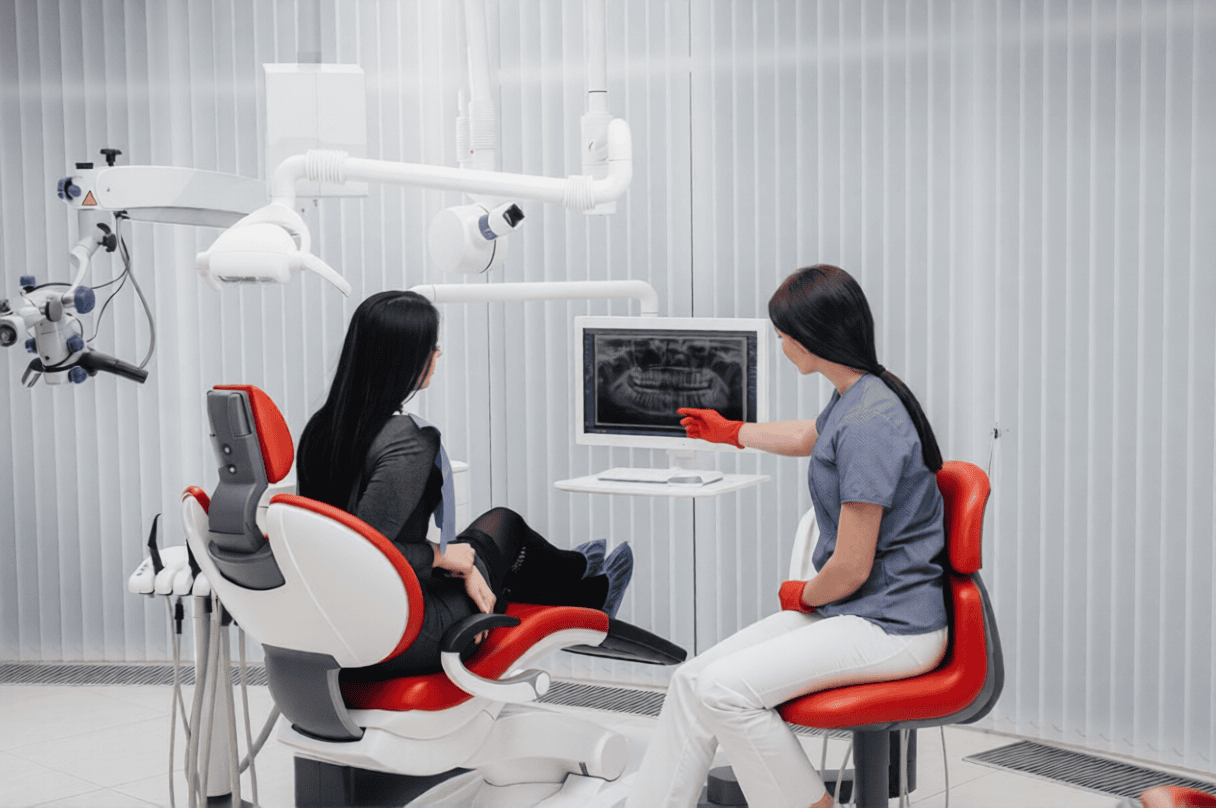
The dental professional examines your teeth, gums, jaw relationship, and overall oral health. This assessment identifies alignment concerns, bite discrepancies, and any conditions requiring attention before treatment. You will be asked about your primary concerns and treatment goals.
Most consultations include the following diagnostic records:
- Panoramic radiographs show all teeth, roots, and jaw structures in a single image.
- Cephalometric radiographs provide lateral views of the skull for detailed analysis when required.
- Clinical photographs document current tooth positions from multiple angles.
- Digital impressions create precise three-dimensional models of your teeth.
Your dental provider assesses how your upper and lower jaws relate to each other and documents overbite, underbite, crossbite, or open bite patterns. Any existing dental issues, such as cavities or gum disease, must be addressed before commencing orthodontic treatment.
Depending on your case, options may include traditional metal braces, ceramic braces, lingual braces, or clear aligner systems. Your provider explains which approaches can effectively address your specific concerns for dental braces in Perth.
Based on the complexity of your case, you will receive an estimated orthodontic treatment timeline. Most treatments range from 12 to 24 months. You will receive detailed information about treatment fees and available payment structures, with many clinics offering interest-free payment plans.
At the conclusion of the appointment, expect a written treatment plan outlining objectives, a transparent cost breakdown, timeline estimates, and documentation of next steps. There is no obligation to commit immediately, and many patients take time to consider their options.
Creating Your Personalised Orthodontic Treatment Plan
Once diagnostic records are complete, the dental team begins detailed planning. This phase translates assessment findings into a treatment approach tailored to your clinical needs.
Your provider systematically reviews X-rays, photographs, and digital scans, measuring angles, assessing bone structure, and mapping current tooth positions. Many dental clinics use advanced digital software to simulate projected tooth movement.
Treatment plans account for your individual tooth positions, jaw relationship, treatment objectives, and age-related factors such as ongoing jaw growth in younger patients.
Before orthodontic treatment commences, your mouth must be in optimal health:
- Active dental decay needs to be filled before brackets are placed on tooth surfaces.
- Gum disease requires management so that healthy tissue surrounds teeth during movement.
- Professional cleaning addresses accumulated plaque and calculus deposits.
- Failing restorations may need to be replaced to maintain structural integrity throughout treatment.
- In cases of severe crowding, removing one or more teeth may provide necessary space for proper alignment.
Treatment duration varies significantly based on factors affecting the orthodontic treatment timeline:
- The complexity of misalignment determines the extent of tooth movement required.
- Patient age and jaw development status influence how teeth respond to forces.
- Compliance with instructions regarding elastic wear and oral hygiene affects progress.
- Biological responses vary between individuals, regardless of other factors.
- The selected appliance type may affect the pace of certain movements.
Most orthodontic treatment requires 12 to 24 months. Cases involving minor crowding may conclude sooner, whilst complex cases involving significant bite discrepancies may take longer. The dental team provides estimates based on your circumstances. Treatment cannot be rushed without compromising results, as teeth move through bone gradually.
After receiving your treatment plan, review it thoroughly. Consider the projected timeframe and how treatment fits your circumstances. Review payment options and, if applicable, health fund coverage. Once you decide to proceed, schedule the initial placement appointment.
Getting Your Braces Fitted - The Placement Appointment
The fitting appointment marks the beginning of active treatment. After weeks or months of planning, brackets and wires for dental braces Perth patients rely on are placed on their teeth.
Appointment preparation:
- Eat a proper meal beforehand, as your teeth may feel sensitive afterwards, making eating uncomfortable initially.
- Brush and floss thoroughly before arriving, as clean teeth allow brackets to bond properly.
- Allow 60 to 90 minutes for the fitting appointment, depending on treatment complexity.
The fitting process includes:
- Professional polishing detaches any remaining film and creates an ideal bonding surface.
- Each tooth receives conditioning gel, bonding adhesive, and a precisely positioned bracket.
- A curing light hardens the adhesive within seconds for each bracket.
- The archwire runs through all brackets, exerting a force that gradually moves the teeth.
- Elastic bands may connect the upper and lower teeth when needed to address bite issues.
Expect tooth sensitivity or mild achiness after placement, particularly when biting down. Cheeks and lips may become irritated as soft tissues adapt to bracket edges. This adjustment period is common.
Contact your dental provider if you experience any of the following:
- You are experiencing severe pain that does not respond to over-the-counter pain relief.
- A bracket has completely detached from your tooth and needs to be reattached.
- A wire is poking sharply into tissue, and you cannot manage it with wax.
- You notice significant swelling around your mouth or jaw area.
Over-the-counter pain relief helps manage initial discomfort. Cold foods like yoghurt or smoothies can soothe sensitivity. Orthodontic wax covers irritating brackets. Stick to softer foods for the first few days, such as soups, pasta, scrambled eggs, and smoothies.
As part of the appointment, your dental provider provides guidance on effective cleaning techniques, such as:
- Brush above and below the wire, angling bristles towards the gumline for at least two to three minutes.
- Brush after every meal, or at least twice daily, and rinse thoroughly afterwards.
- Use floss threaders to guide floss under the archwire, as standard floss cannot pass easily.
- Interdental brushes clean between brackets, whilst water flossers flush debris from hard-to-reach areas.
Poor oral hygiene can lead to white spot lesions, cavities, and gum inflammation, which can affect treatment progress. Most patients attend braces adjustment appointments every four to eight weeks for progress checks and wire adjustments.
Navigating Daily Life During Your Braces Journey
Active orthodontic treatment spans months or years. During this time, braces become part of your daily routine. Knowing how to manage eating, cleaning, and attending appointments helps you progress smoothly through the braces journey in Perth.
Most patients attend every four to eight weeks for progress evaluation, wire changes, elastic band replacement, and professional cleaning around brackets. Adjustment visits take 15 to 30 minutes. Keeping your braces adjustment appointments scheduled helps maintain planned treatment progress, whereas missed appointments extend the total treatment duration.
Avoid these foods that can damage braces:
- Hard foods such as raw carrots, whole apples, crusty bread, and hard lollies can dislodge brackets.
- Sticky foods like caramel and chewy lollies can pull on brackets and get trapped in wires.
- Crunchy foods like popcorn can break brackets or lodge under wires.
Cut hard foods into smaller pieces before biting. Choose softer bread varieties and tear meat into smaller portions. A detached bracket requires an additional appointment and results in the tooth receiving no corrective force during the delay.
Maintain proper oral hygiene during treatment:
- Brush above and below the wire, angling bristles toward the gumline for at least two to three minutes.
- Brush after every meal, or at least twice daily, rinsing after other meals.
- Use floss threaders to guide floss under the wire and interdental brushes to clean between brackets.
- Water flossers help flush debris from hard-to-reach areas.
- Poor oral hygiene leads to white spot lesions, cavities, and gum inflammation.
Your teeth may ache for 24 to 48 hours after each adjustment, which is common during tooth movement. Orthodontic wax reduces irritation from brackets and wires. Contact the clinic for severe pain, detached brackets, poking wires, or significant swelling not improving after several days.
Lifestyle considerations:
- Contact sports require mouthguards to protect your braces and mouth, with custom mouthguards offering the most suitable fit.
- Wind and brass instrument players experience a brief adjustment period, with most musicians adapting within a few weeks.
- Coloured elastic bands can be swapped for clear or silver ones before important events.
- Maintain good oral hygiene to prevent visible food debris in photographs.
Most people notice improvement within the first few months, with early changes often involving the front teeth. Progress is not linear—some months show dramatic change whilst others seem static. Voice concerns openly rather than worrying silently.
What to Expect When Your Braces Come Off
Treatment completion occurs when your dental provider determines that alignment goals have been achieved. This appointment marks the transition from active treatment to the retention phase.
Your provider assesses whether teeth have moved into their planned positions, considering tooth alignment, bite relationship, and overall treatment objectives. A final evaluation appointment before removal confirms treatment completion.
The removal process takes 30 to 60 minutes and includes:
- Brackets are detached using instruments that apply pressure to release them from the tooth surfaces.
- Adhesive is cleaned from tooth surfaces using specialised tools.
- Teeth are polished to restore smooth surfaces.
- Professional cleaning and final photographs are taken for the records.
What to expect during and after removal:
- You may feel pressure as brackets are released, but this is generally not painful.
- Teeth may feel different immediately after—smooth and slippery after months or years of brackets.
- Slight sensitivity can occur as teeth adjust to the change.
- The smooth sensation takes getting used to for the first few days.
The retention phase begins immediately. In many cases, retainer fitting occurs on the same day as the braces removal. Recognising that treatment is not finished at this point is crucial—retention is an integral part of the orthodontic process. Your dental provider will explain the importance of adhering to orthodontic retainer wear protocols to maintain the alignment achieved during active treatment.
Retention Phase - Maintaining Your Results
The retention phase is as important as active treatment. Without proper retention, teeth can shift back towards their original positions.
Teeth have a natural tendency to shift throughout life. After active treatment, the bone and soft tissues surrounding your teeth need time to stabilise in their new positions. The first months after brace removal represent a high-risk period for relapse. Retention preserves the alignment achieved and protects your time and financial investment.
Two main types of retainers are available:
- Removable retainers:
Clear plastic retainers wrap around teeth, similar to clear aligners. Wire and acrylic retainers feature a wire across the front of the teeth with an acrylic piece against the roof of the mouth or inside the lower teeth. - Fixed retainers:
A thin wire is bonded behind the front teeth and remains in place continuously. These are placed on the lower teeth in most cases, sometimes on the upper teeth, and require special flossing techniques under professional supervision at dental check-ups.
Retainer wear schedules progress through phases:
- Initial full-time wear lasts three to six months, with retainers worn 22 or more hours per day, removing only for eating and cleaning.
- A gradual transition to nighttime wear begins after the initial period, as instructed by the dental team.
- Long-term recommendations vary, with many dental professionals recommending indefinite night-time orthodontic retainer wear based on the principle that teeth should be retained as long as you want them straight.
Proper retainer care includes:
- Clean removable retainers daily with a soft toothbrush and mild soap or denture cleaner, and avoid hot water, which can warp the plastic.
- Store retainers in their protective case when not wearing them to prevent loss and damage.
- Avoid leaving retainers in hot water, in the dishwasher, or on car dashboards, as heat can cause irreversible damage.
- Check retainers regularly for wear or damage; cracks or distortions can affect fit and function.
- Replace removable retainers every few years due to common wear; costs vary by type and provider.
Common retention phase challenges and solutions:
- Forgetting to wear retainers:
Set reminders until orthodontic retainer wear becomes habitual, and keep your retainer case visible as a prompt. - Losing retainers:
Commonly store retainers in their cases; do not wrap them in napkins or tissues, and label the cases with contact information. - Retainer damage:
Handle retainers carefully, do not bite down on them, and avoid leaving them where pets can access them. - Consequences of stopping wear:
Teeth can shift within days to weeks; minor shifts may require resumed wear, whilst significant shifts may require new retainers or re-treatment.
Periodic check-ins with your dental provider occur at intervals determined by your case. Continue regular dental check-ups with your general dentist. Contact your provider if you notice teeth shifting, your retainer becoming tight or uncomfortable, or damage to your retainer.
Final Thoughts
The orthodontic process involves multiple phases, each contributing to achieving and maintaining aligned teeth. From the initial orthodontic consultation through to ongoing retention, knowing what to expect at each stage helps you engage with your care.
Every patient’s journey differs based on their specific clinical needs, age, and treatment goals. However, the overall structure remains consistent across Perth dental clinics. Professional orthodontic care follows evidence-based protocols developed through decades of research and clinical experience.
If you are considering orthodontic treatment, scheduling a consultation provides personalised information specific to your situation. There is no obligation to proceed, and the consultation itself offers valuable insights to support your decision-making.
The braces journey in Perth represents a commitment of time and resources. However, for many people, the long-term benefits to oral function, dental health, and personal wellbeing justify that investment. Success requires a partnership between the patient and the dental team, with consistent engagement throughout every phase of care.